Demo Part 1

Last week we got our demo permit so we spent Memorial Day weekend knocking down the existing one-car garage that will eventually be moved to the back of the property.  That way the front house will still have a garage.  Access is currently from the front ribbon driveway but the re-built garage will have alleyway access.  See the Demo Plan for reference.

We got the roof off pretty quickly but salvaging the double layer of brick is going to take a while.  Check out this cool time-lapse video!

Stay tuned for Demo Part 2

Steamboat Field Trip

Last Friday Scott, Rio and I packed up the truck and headed to Steamboat, Colorado.   We went to check out Zola Window’s showroom and it came with the added benefit of getting out of town and breathing in the mountain air.  I had never been to Steamboat so it was a treat to see a new part of our beautiful state while we wait to hear back from the City on building permits.   An update on our permit status; we did receive one round of City comments (nothing earth shattering) that we are currently addressing and we plan to resubmit next week.  We will let you know when we get the green light to start building.

So back to our trip; after a quick pit stop at the Steamboat dog park, we made our way to the window showroom.  Scott has done a lot of research on energy conserving windows and Zola offers a triple pane glass that will increase the insulation of the house and contribute to our overall design goal of reaching LEED Platinum certification (see post on 8.5.2016, “Energy Efficient Home”) .  Grant Bursek showed us the different options from lift and slide doors, to tilt and turn windows and he gave an overview of the hardware and finish options.  Though, the best part was our tour of a passive home that is currently under construction and near completion.    Below are some photos from our visit.  Although our home won’t be as elaborate and won’t have floor to ceiling windows or that view; we still think it will be great!

2.14.17

img_8566

This week we hit another milestone – submitting our complete drawing set to the City & County of Denver. It will take about 4 weeks for staff to review our application for zoning, building code compliance, waste water, etc. Once reviewed, we can respond to comments and re-submit for another review that takes about 2 weeks.

Although we don’t have permits yet, 2.14.2017 was an important day for us. We started the year-long effort not fully aware of what we were capable of. Spending many of our nights and weekends tackling different elements of the project, together, one step at a time. In the end, our persistence and constant exchange of design ideas and working together in tandem brought us to this is point.

Obtained Financing. Up Next: Permitting

A quick synopsis of recent advancements.

There are two milestones that need to materialize for the project to become a reality:  (1) Obtaining enough financing to fund the construction of our home and (2) Submitting construction documents to the City to receive the necessary building permits.

I am happy to report that we are financed.  We have a home equity line of credit which should allow us to fund a significant portion of the build.  As previously mentioned, we have owned our home since 2009 and in those 8 years the value of our property has risen significantly, making this project possible.

In parallel to pursing funding options we are pushing to get construction documents into the City for permitting.  We are almost there!  I will update you and share those drawing on the blog when they are submitted.

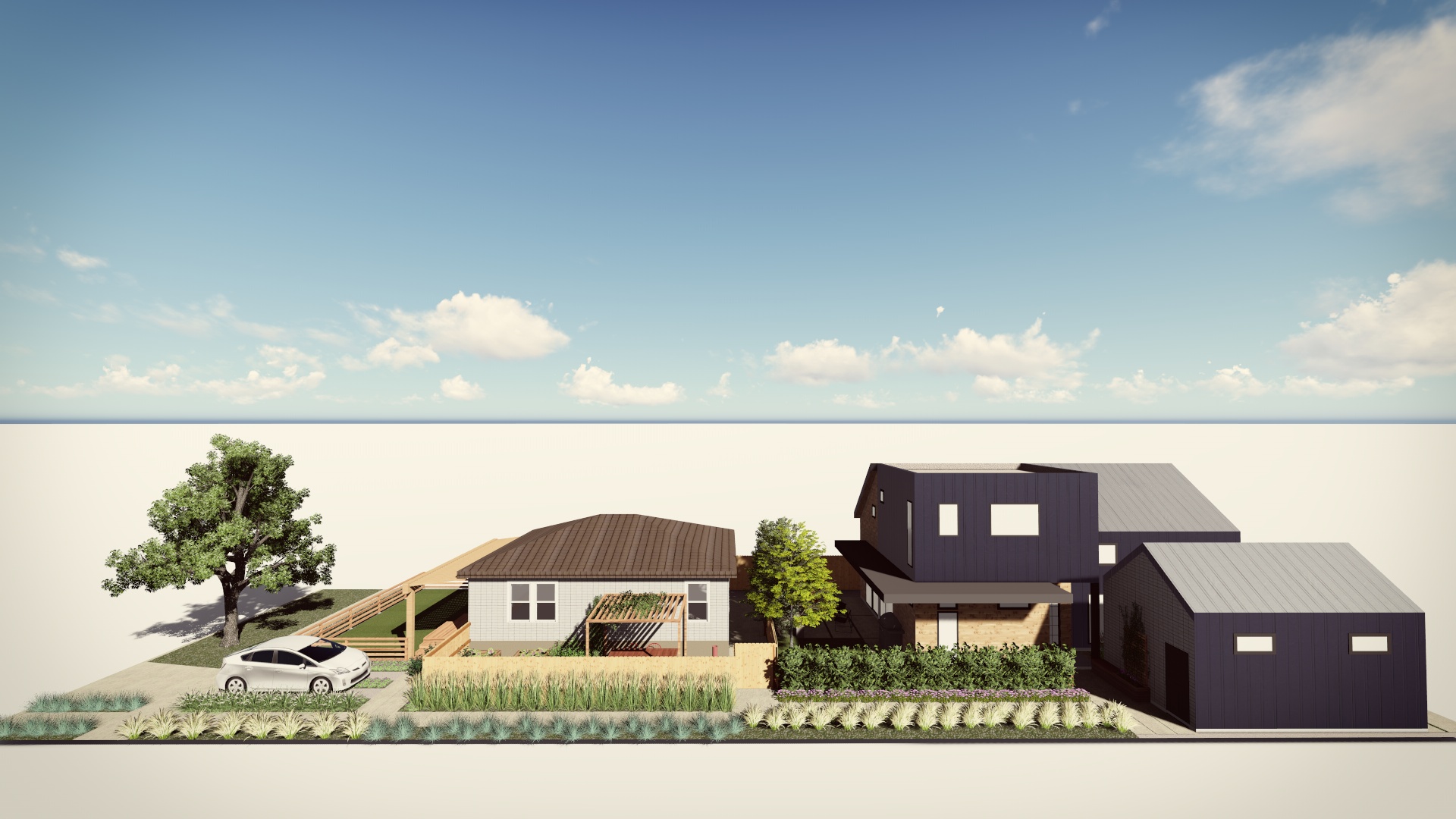
In the meantime I wanted to share a teaser…Below is a recent 3D rendering showing 3634 Wyandot (our current home) at street-front, and the new proposed tandem house, 3632 Wyandot, in the back.

view4

Tandem House vs. Accessory Dwelling Unit

Aiding in our design process from concept to final design, Scott and I often look for precedents as an inspiration to help guide the decision process and methods to employ in our house design.  These precedent studies can help refine the character of the house and also determine certain aesthetic elements.  Sites like Houzz, Architizer, and Dwell Magazine are great resources.  Never mind the inspiration we draw from professional practice and observation of new design and construction in Denver.

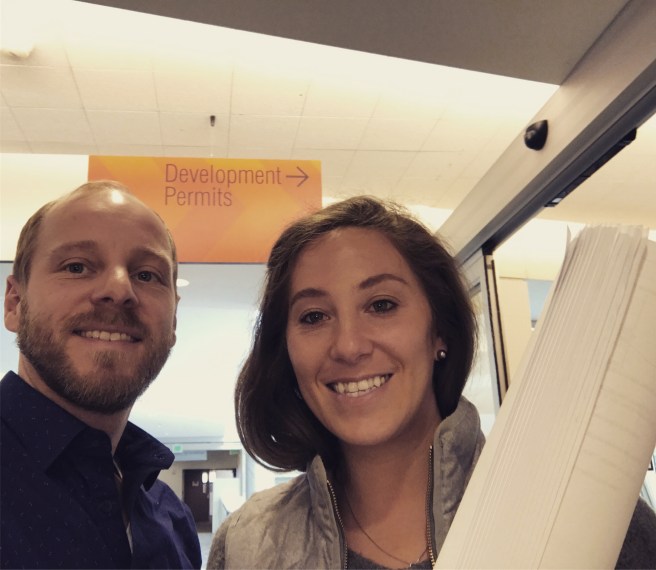
While design inspiration may be abundant, there are very few instances of examples of the tandem house form in Denver.  We have scoured neighborhood alleyways, internet sites like Zillow, and have had an open dialog with allied professionals and the City; and yet through all this research, thus far, have found only a handful of tandem house precedents in Denver.  Even when we went into the City development office to review preliminary drawings, it was apparent that they had not seen many tandem house permit applications, as few employees were fluent in this building form.

Further, many times when we discuss the building of a second home off the alleyway of our lot, the common response is “Oh! An ADU!” or “Oh! A Carriage House!”  And even though people are aware of Accessory Dwelling Units (ADU’s) and Carriage Houses, it has taken the ever increasingly competitive housing market and demand for affordable child and senior care options to create a pent-up an interest.  The movement still has yet to take off, despite it being an allowed building form for nearly 7 years now. And, the short-term rental movement (made possible through sites like Airbnb) has only begun to benefit from the ADU market in Denver.

ADU’s and Carriage Houses definitely have their fair share of benefits but they can also, in many ways, be restricting and not satisfy every homeowner’s needs.  In our case, the Tandem House form is more appealing alternative. Below are key comparisons:

ACCESSORY DWELLING UNIT (ADU):

Building Form Intent: Establish standards for one primary dwelling structure and one accessory dwelling structure on a single zone lot; where the zone lot owner is required to occupy one of the units and must own both structures.

Maximum Building Footprint: Zoning requires that the maximum footprint is limited to 1,000SF (as opposed to the max building lot coverage that is more flexible with the tandem house building intent).

Maximum Building Height: Limited to 24’ defined by 1.5 stories high.

Payback Potential: The Accessory Dwelling Unit cannot be sold; only rented. Return on investment can be translated into an overall increased home value and generated monthly income from renting it.

TANDEM HOUSE:

Building Form Intent: Establish standards for two primary dwelling structures on a single zone lot; intending that the two primary structures can be legally sold separately and owned by two separate entities.

Maximum Building Lot Coverage: Zoning limits the total building coverage on a single zone lot to 37.5%. This gives flexibility to the building footprint of a second primary structure when a primary structure already exists. Say, for example, the existing primary structure at the front of the lot covers 15% of the zone lot, the second proposed  primary structure in the rear can cover the remaining 22.5% of the zone lot; potentially allowing for a larger footprint if setbacks allow.

Maximum Building Height: Limited to 24’ and 30’ (depending on where the structure sits on the lot) defined by 2.5 stories high.

Payback Potential: The tandem house could be sold or rented. If sold, the return on investment can be gained back immediately.  If rented, monthly generated income could be higher compared to an accessory dwelling structure with fewer amenities (fewer bedrooms and bathrooms and less living space).  You may also decide to rent initially and later sell if circumstances change.

Both building forms create more options for homeowners and it is important to compare the two if your lot is zoned for it.   Whether it is more space for a growing family, to cover monthly mortgage payments, increase home value, or to immediately gain a return on an investment. No matter the attractiveness, Tandem Houses and Accessory Dwelling Units create more housing options in a city with serious affordable and market rate housing deficits.

Soil Test and Geotechnical Investigation

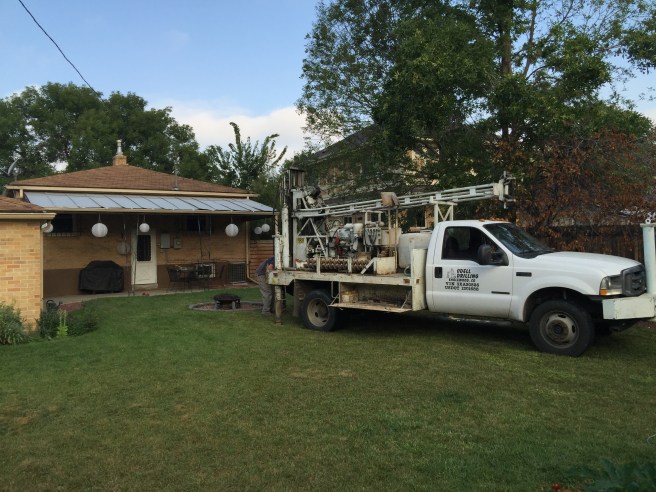
Although we are still waiting for the results of a geotechnical report, we were able to check Soil Testing off the list. The report that comes back must accompany the construction documents that we submit to the City for permitting. Two boring locations were drilled with a 4-inch diameter rig, powered by a 140-pound hammer that goes down to 25′ below the surface!


img_8232

Samples were taken at select intervals and material will be logged to evaluate the engineering properties of the soil layers that include swell consolidation testing and moisture-density determinations. When we get the geotechnical report back Scott will use this to determine the design of the foundation and appropriate structural load reductions.

Taking this step made the process feel very real. Like this is really happening! The neighbors must be a little curious since we had to take the fence down in the back to get the truck in. And, it’s difficult to ignore the shaking as the rig pounds into the ground!

Energy Efficient Home

Did we mention that our goal with Tandem House is to make it an energy efficient home? We are betting that home market preferences are shifting more towards environmentally sound building practices versus traditional building code standards. Our goal is to earn certification under the LEED for Homes Rating System which will ensure the highest home performance without sacrificing comfort or cost and providing a healthy living environment.

LEED for homes requires that you achieve a given number of point-based credits within the rating system that addresses green building standards throughout the life cycle of design and construction of the home. There are four levels of certification based on the number of point credits earned (Certified, Silver, Gold or Platinum) which we aim to earn the Platinum Certificate. Point credits are earned pertaining to specific categories include:

  • The homes location and access to transportation
  • The sustainability of the site (i.e. using non-invasive plant species and reducing the heat island effect)
  • Maximizing the home’s water efficiency (reducing the amount of indoor and outdoor water use)
  • Creating efficient and energy consumption and a healthy atmosphere (i.e. active solar ready design, reducing energy consumption and envelope insulation, etc.)
  • Carefully choosing building materials
  • Upholding indoor environmental quality
  • Innovating sustainable design strategies

In order to earn the LEED certification, we are required to have two home inspections by a LEED Green Rater that include a thermal bypass inspection and a final inspection. We have had an initial consultation with a LEED for Homes consultant located in Denver called Green Spot Real Estate who will eventually be able to provide our inspections and certify the home.

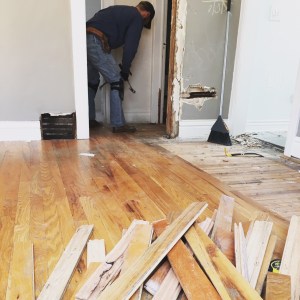
Recently, in order to address the Materials and Resources-Construction Waste Management LEED Credit we reclaimed wood floors from a neighbor’s home that they were getting ready to demolish and build new. It was a neat experience to be a part of a neighbor’s effort to prevent waste going to the landfill but also to support our effort to reuse and recycle construction material.

IMG_7590                        IMG_7591

While the house will not be a certified passive home by PHIUS, it will likely achieve similar performance. Passive House certified homes must prove to follow five building science principles:

  • Employ continuous insulation
  • Create an extremely airtight building envelope–preventing outside air and loss of conditioned air
  • Utilize high-performance windows
  • Use balanced energy ventilation
  • Create Solar Gain to maximize the sun’s generated energy

Just this week we sent house plans to a company that makes Structural Insulated Panels, or SIPs to get cost estimates. We plan to use these fabricated panels that consist of an insulated core sandwiched between oriented strand board (OSB) to construct the walls and roof of the Tandem House.

Determining what is Possible

The first step in our process has been interpreting the City & County of Denver Zoning Code that defines general building design elements, the location of structures, setbacks, and vertical height requirements. The code has guided our process over the past few months–working towards the goal to develop site plans and elevations that meet qualifications for zoning permit review. The review by Denver’s development services staff ensures compliance with the standards and provisions outlined in the Code. Eventually, when these plans are approved we will receive appropriate zoning and building permits.

We began this stage by testing different building configurations to maximize the allowable footprint and challenge it against programmable wants and needs for the site (i.e. garage space for both front and back houses, outdoor spaces, and a flexible building form that encourages the functional use of space).

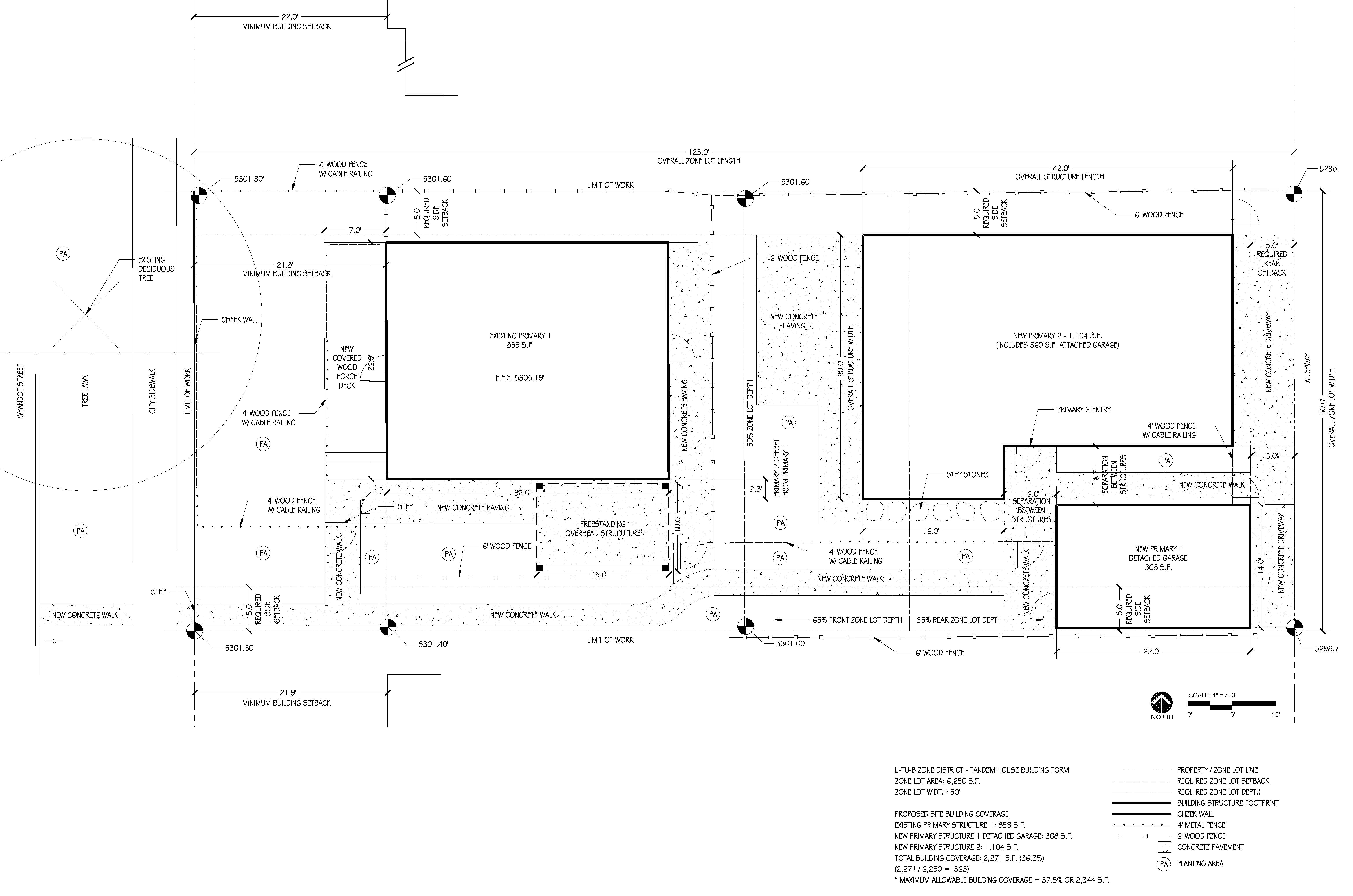
Intermittently we shared our site plan study with staff reviewers during City permit counter walk-through hours. At each meeting, planners were able to validate whether or not our layout complied with set forth standards. We went through this process several times until we settled on a building configuration that we felt confident in developing further. Below is the configuration that we have settled upon.

03 - Site Plan-LP-101_blog

Called out in the plan are required front, side, and rear setbacks as well as the 65%/35% Zone Lot Depth line. This boundary line determines the bulk height plane in which structures in the front 65% of the lot are limited to 30-foot height restrictions and the back 35% to a 24-foot height limit. For many developers it is the Zone Lot Depth Line that makes the side-by-side duplex zoning configuration more attractive because you can put two 3-story homes at the front of the lot, thus maximizing total square footage. Versus the limitation of tandem house zoning that restricts the height of the back house to only 2 stories.

Other zoning parameters to point out is the structure length of New Primary 2 that we maxed out at 42 feet long. Structure width is allowed at 32 feet that we limited to 30 feet because we maximized the 37.5% allowable building coverage of the site. Because the Primary 1 garage is detached, the 5-foot side setback does not apply and therefore we are able to push the structure out towards the property lot line. The configuration creates space between Primary 2 and Primary 1 detached garage to form a secondary entry from the back alleyway. Private landscape space is programmed at the front and south side of Primary 1 and Primary 2 landscape space is between the two primary structures.

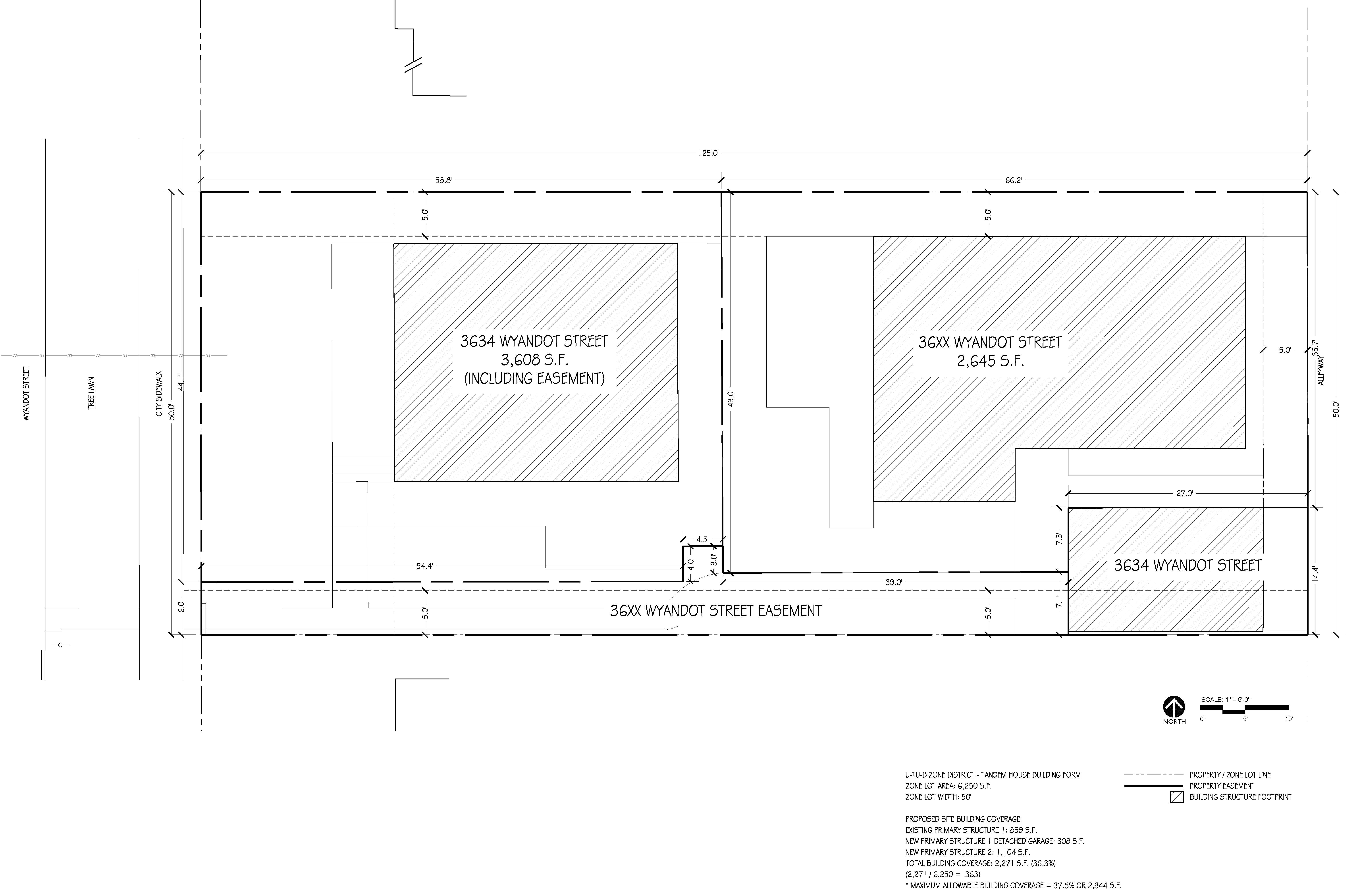
Along with the above site plan, we are also required to submit as part of the permit review, a demolition plan, building elevations, and site survey which we are currently developing. And, in congruence with these plans, we have proposed the below site re-configuration to be considered by the County Assessor in dividing up the lot into separate land ownership. The proposed easement will be owned by 3634 Wyandot but will, for legal purposes, allow utility use for 36XX Wyandot.

04 - Parcel Reconfiguration-000

We are excited about our initial progress and our next steps include developing interior floor plans and exterior architecture through 3D Revit modeling.

Tandem House

We are back living at the Wyandot House and our attention is finally focused on building our Tandem House! It has been a long road to get to this point but we have been taking it one step at a time. Another big milestone is out of the way now-Scott completed and passed his final architecture exam to become a licensed architect! One thing we have realized as we take each step forward to reaching our goal is that we become more confident in our game plan and even more dedicated to seeing this project through to the end.

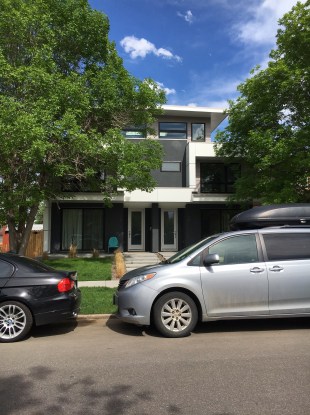
In this post, I wanted to take one more step back and finally tell you why we are choosing to build a tandem house as opposed to the common side-by-side duplex that is appearing up and down our neighborhood streets. As I explained in a past post, most developers are seeking residential lots of our size (6,250 SF) with a 1-single family (SF) home on it, knocking it down, and building a side-by-duplex like the one shown in the image below.

IMG_7750

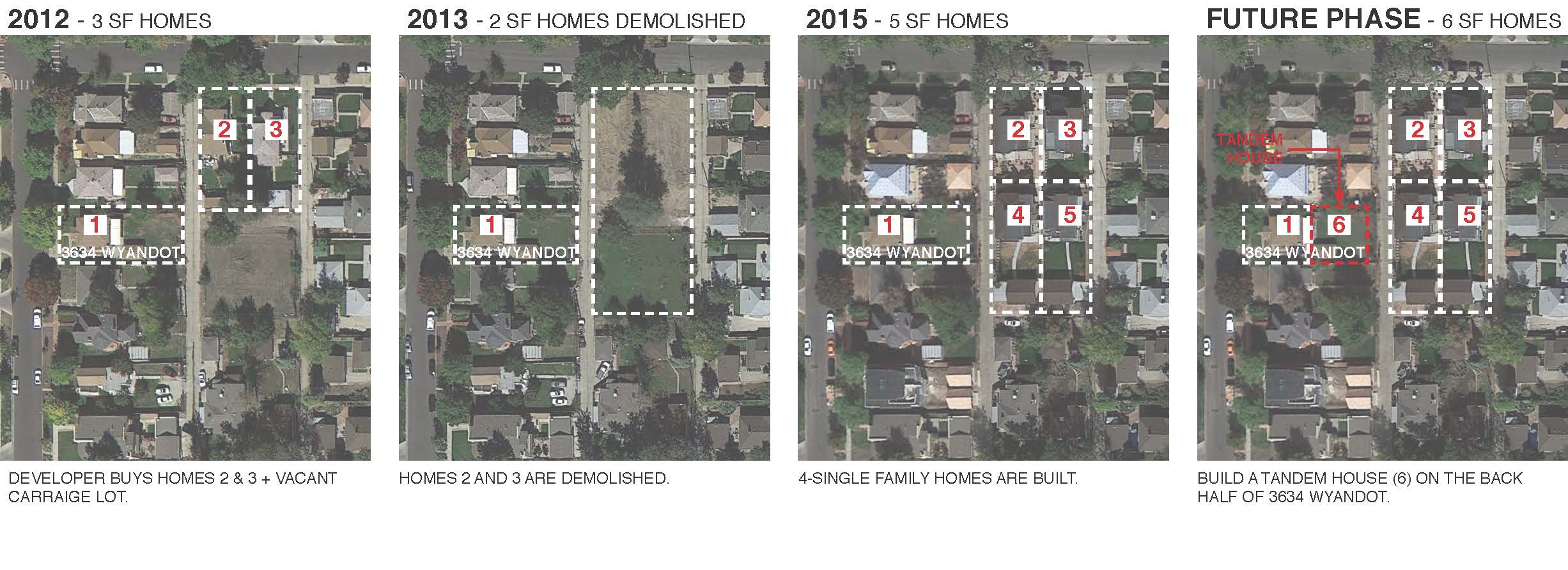
To the contrary, we have chosen to pursue the tandem house zoning configuration on our lot for a number of reasons.  (1) our neighborhood block has set a precedent for homes that lie in the alley rather than having direct street frontage. So we are intrigued by the prospect of building our home off the alleyway and activating the internal block to respond to the relationship we will have with interior neighbors. And, (2) this configuration is the most financially feasible scenario that allows us to stay in the front house while we oversee the construction of the back house.   Once the back house is built we can then move into it and either sell the front house (as is) or renovate and pop-the-top before selling it.  Below is a graphic that shows the unique situation behind our house where (4) single-family (SF) homes have recently been built.  The tandem house is our response to the existing condition.

Context to Carraige LotHere are some perspective images of the (4) homes behind ours.

IMG_7744  IMG_7741

The second view is the future home of our Tandem House!

S.A. Rank

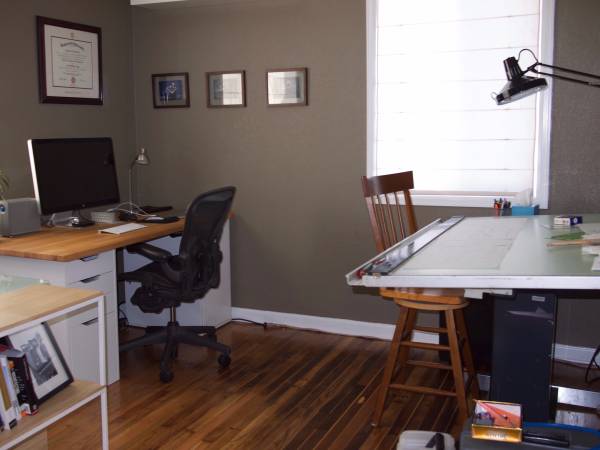
We spent the last year living in and revitalizing the new house; putting a fresh coat of paint on the walls, updating the kitchen and upstairs bathroom and most importantly establishing our design studio.

design studio

It is in this office that we conceived the Tandem House Blog, established S A RANK LLC. and have planned our next adventure to build a tandem house in the back half of the 3634 Wyandot Street 6,250 SF lot.

Some exciting new developments have come up since I last posted that have included Scott studying and passing his first architecture licensing exam and we ordered a site survey so that we are able to put together the beginning stages of a development permit package. Eventually, when we have narrowed our concept down, we will submit the package to the City to review against zoning requirements specified for our lot and if approved they will give us our building permit.

Another new development is that we are moving back to 3634 Wyandot. This way, over the next year we can be on site to design and build the house on our lot.